



Vibration Damping Rubber Bushing For Vehicles
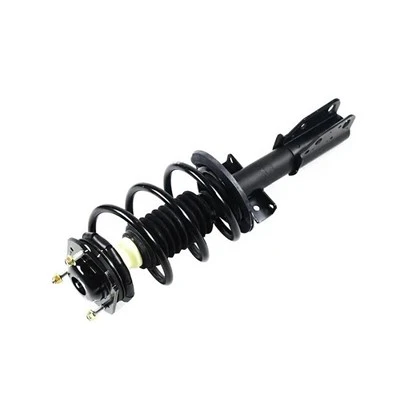
The Vibration Damping Rubber Bushing for Vehicles is a rubber-to-metal bonded isolating component installed between moving or load-carrying vehicle parts. It is used in suspension control arms, stabilizer systems, subframes, engine or powertrain mounts, and related passenger-car, truck, and bus assemblies where joint movement and vibration isolation are required.
Core Advantages
High-Strength Rubber-to-Metal Bonding
The vulcanized bond transfers radial and torsional loads through the rubber body instead of allowing slip at the sleeve interface. During repeated steering, braking, and small-angle suspension movement, this keeps the designed deflection path stable and limits fretting between rubber and metal.
Controlled Radial and Torsional Compliance
The elastomer section accommodates radial displacement and repeated torsional movement while holding the inner and outer sleeves in their designed relationship. In control-arm and stabilizer positions, this isolates small road inputs without allowing uncontrolled joint movement.
Vibration Isolation Under Repeated Road Input
High-frequency road vibration is partly absorbed in the rubber section before it reaches the chassis or powertrain structure. During continuous small-amplitude vibration, the rubber dissipates part of the motion before it reaches the adjoining metal components, reducing transmitted vibration and impact loading.
Technical Specifications
|
Material |
Natural Rubber (NR) / EPDM / SBR |
|
Bonding |
High-strength rubber-to-metal bonding |
|
Shore Hardness |
45-70 Shore A |
|
Static Load Capacity |
Customizable based on vehicle weight |
Customization
Bushing Dimensions
Inner sleeve diameter, outer shell diameter, overall length, flange geometry, rubber wall thickness, and installation orientation can follow 2D or 3D drawings, or dimensions taken from a vehicle sample.
Rubber Specification
NR, EPDM, or SBR can be specified with finished hardness from 45 to 70 Shore A.
Metal Sleeve & Surface
Metal sleeve or shell grade can follow the drawing, with zinc plating or another specified corrosion-protection finish when the drawing calls for it.
Quality Control
Rubber compound and metal sleeves are checked before molding for the specified type, condition, and identification. If hardness is part of the bushing specification, it is verified on cured material to the drawing requirement.
Dimensions that control press fit, bolt clearance, sleeve position, and rubber wall thickness are measured during and after production. The rubber-to-metal interface and molded surfaces are inspected for visible separation, incomplete bonding, trapped contamination, flash, or deformation around the sleeve edges.
Finished bushings go through a final check covering part identity, dimensions, appearance, and packing information before release. When a vehicle program specifies tensile, aging, compression-set, or other rubber-property criteria, those requirements are added to the inspection plan for that part number.
Packaging & Shipping
Packed in heavy-duty cartons suitable for international sea freight. We support EXW and FOB port-of-loading terms.
FAQ
Q: Can you provide samples before mass production?
A: Yes. Samples can be provided.
Q: What is the standard payment term?
A: 30% deposit and 70% balance before shipment.
Q: Should press-in force be applied through the rubber body?
A: No. Apply installation force to the specified metal sleeve or shell surface.
Q: Should final bushing tightening follow the vehicle's loaded installation position?
A: Yes. Follow the vehicle assembly procedure for the final torque position.
Hot Tags: vibration damping rubber bushing for vehicles, China vibration damping rubber bushing for vehicles manufacturers, suppliers, factory, Rubber Automotive Shock Absorbers, Rubber Shock Dampers, shock absorbers
You Might Also Like


Send Inquiry