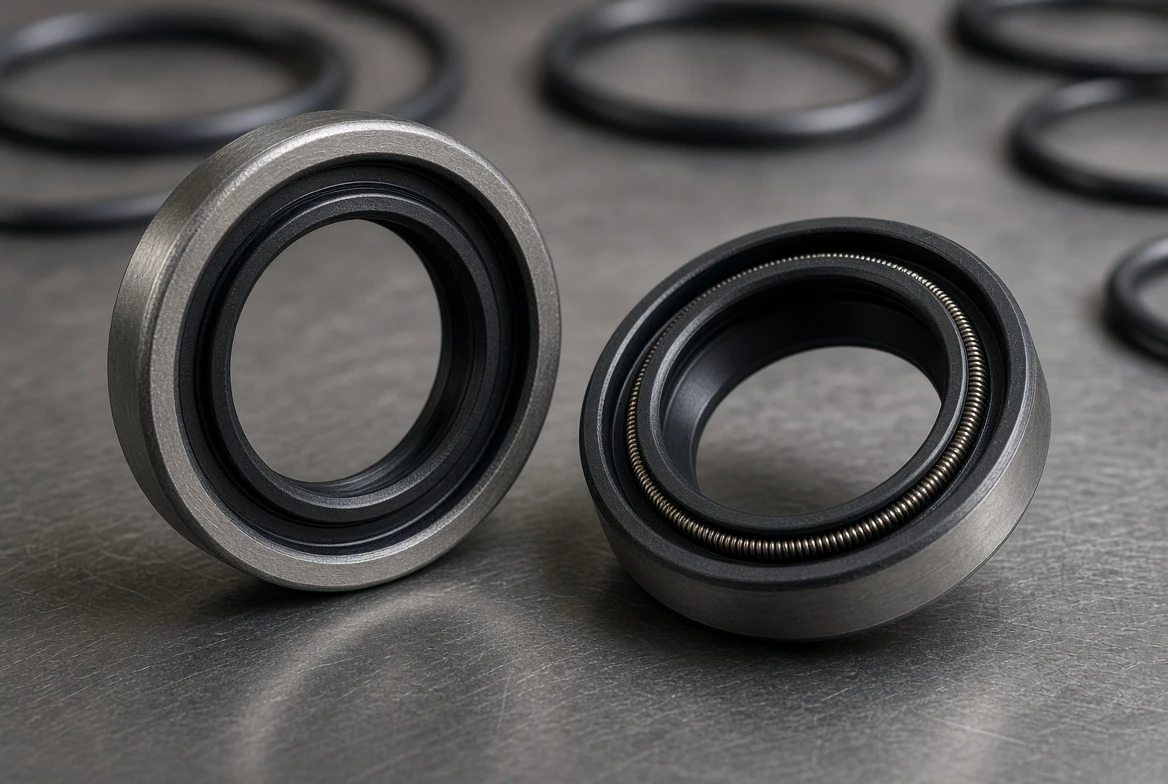
Manufacturing Capabilities
Rotary shaft oil seals and O-rings are mixed, preformed, compression-molded, dipped and dried, then trimmed on one site in Tangxi, Jinhua. The page below follows that sequence
2018.02
Plant start in Jinhua
10,000 m²
Covered factory area
20+
Production staff on site
100–350 t
Compression press range
Manufacturing process
01 Mixing
The compound is mixed in an internal mixer, milled, then curatives are added in a second pass.
02 Preforming
The mixer stock is cut into blanks that match the mold cavity weight.
03 Dip and dry
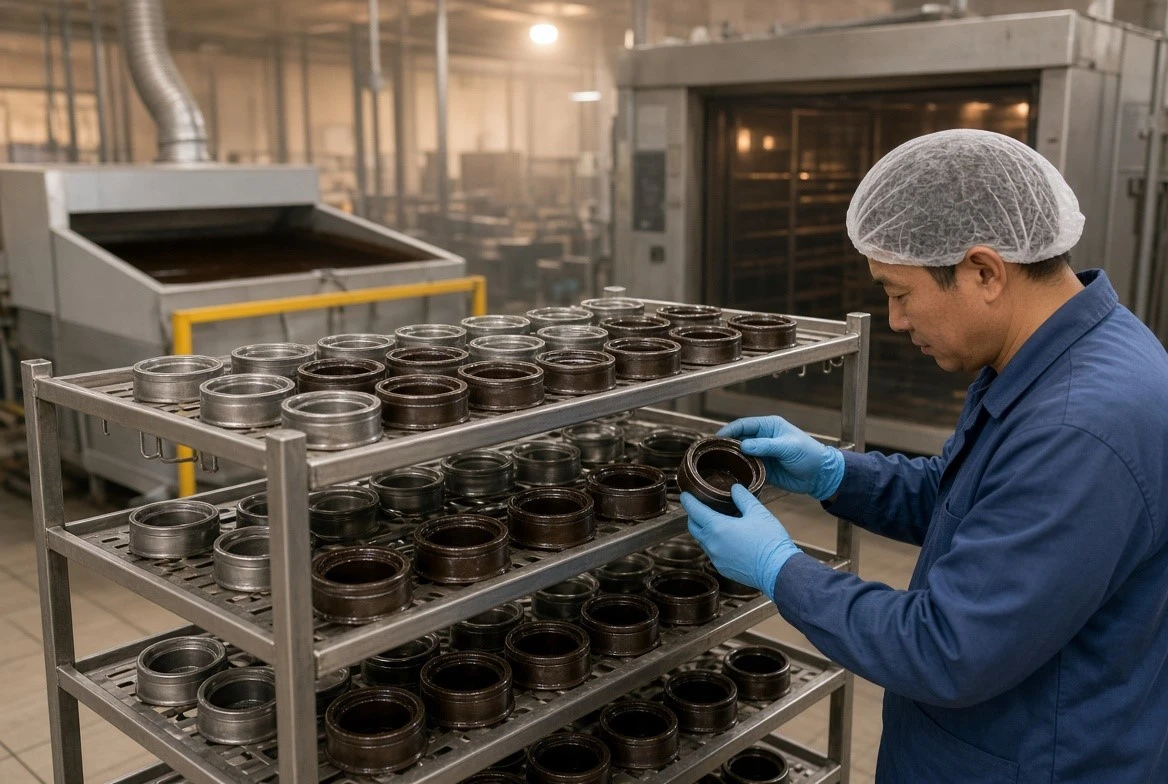
Metal cases are coated with bonding agent and dried before they go into the mold.
04 Molding / Vulcanization
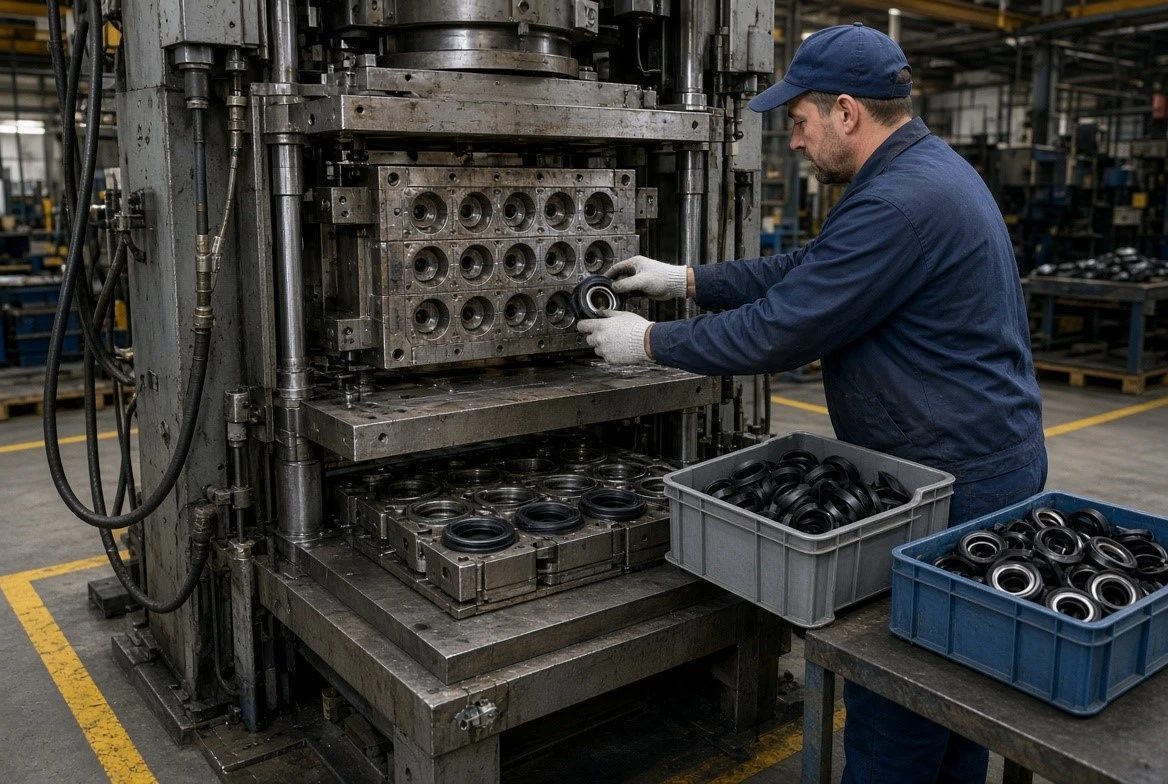
The blank and the metal case are compression-molded on 100–350 t presses. Each cycle records time, temperature and pressure.
05 Trimming
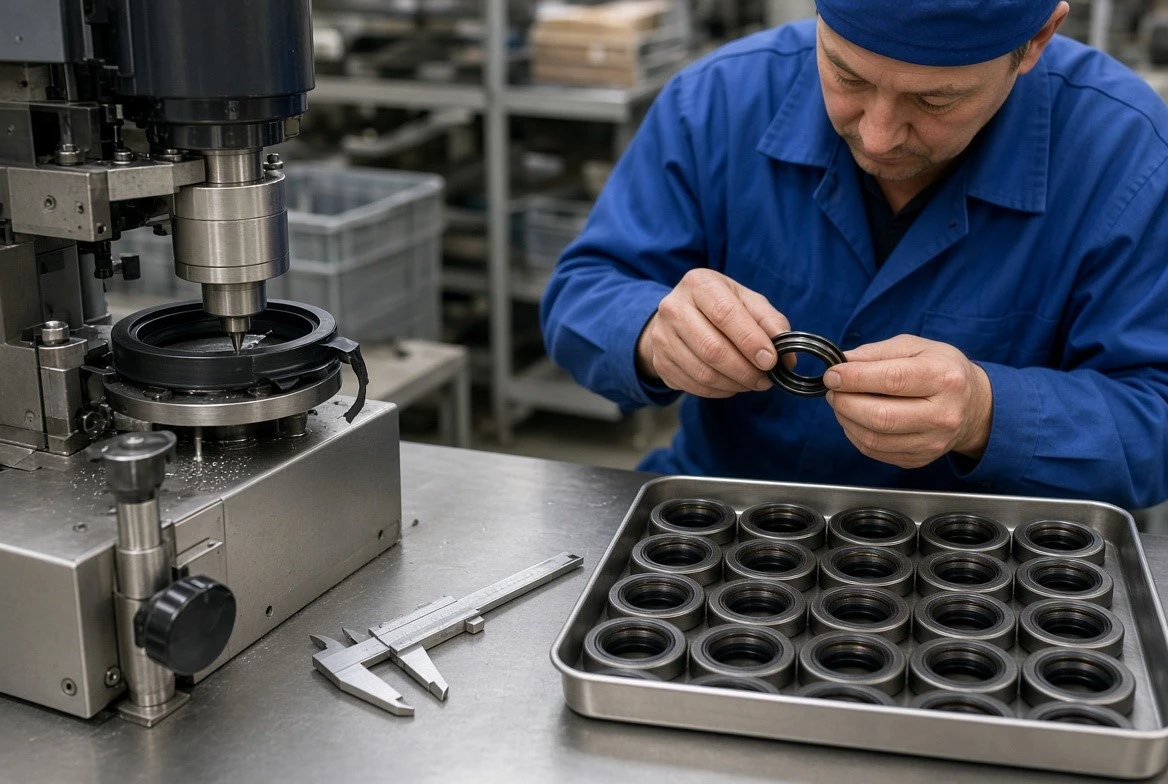
Automatic trim of flash; spring-loaded lips get the garter spring after the cut.
06 Spring fitting
A garter spring is fitted into the lip groove on spring-loaded seals. O-rings skip this step and go to packing.
Rubber-to-Metal Bonding Before and During Vulcanization
Bonding agent is applied before the insert reaches the mold
Metal cases for bonded oil-seal constructions pass through Haobo's dip-and-dry operation before molding. The coated case is dried before it is loaded with the rubber preform.
Bonding occurs in the same cycle that cures the elastomer
During compression molding, heat and pressure cure the rubber while the prepared case remains located inside the cavity. The finished part leaves the mold as a rubber-and-metal assembly rather than two components joined after molding.
The bonding stage is construction-specific
Metal-cased and skeleton-style oil seals use this insert route. All-rubber O-rings do not require metal preparation and move through a shorter molding path.
What Happens During the Compression-Molding Cycle
Preform and insert are located before the press closes
The preformed rubber charge is placed into the mold cavity together with the prepared metal case when the seal construction requires one. Correct charge placement gives the elastomer a controlled path into the body and lip sections of the cavity.
Compression forms the geometry while heat drives vulcanization
Once the mold closes, the compound flows under pressure into the defined cavity geometry. Heat then advances the cure and activates the prepared rubber-to-metal interface on bonded oil-seal constructions.
The cured part leaves molding as one formed component
After the cure cycle, the seal is removed from the tool with its main elastomer geometry already established. The next manufacturing stage deals with flash removal and final assembly rather than reshaping the seal body.
Finishing Converts the Molded Part into the Final Seal Construction
Automatic flash trimming
Excess rubber formed at the mold parting area is removed after vulcanization. This separates the molded sealing geometry from the process flash left by the cavity.
Seal profile finishing
Finished rotary-shaft-seal geometry depends on the lip and case construction produced by the tool. The post-molding stage prepares the molded part for final component assembly rather than adding another molding operation.
Garter spring fitting where required
Spring-loaded oil seals receive the garter spring in the lip groove after trimming. Non-spring profiles and O-rings leave the line without this assembly step.
What the Manufacturing Sequence Builds into a Rotary Shaft Seal
Elastomer body and sealing lip
Compound preparation, preforming and vulcanization create the rubber geometry that forms the sealing body and working lip.
Metal case integrated during cure
On bonded constructions, the prepared steel case is already inside the mold when the elastomer cures, so the structural insert is incorporated into the seal during molding.
Spring added as a separate assembly operation
The garter spring is not molded into the rubber. It is installed after trimming on profiles designed to maintain radial load at the sealing lip.